
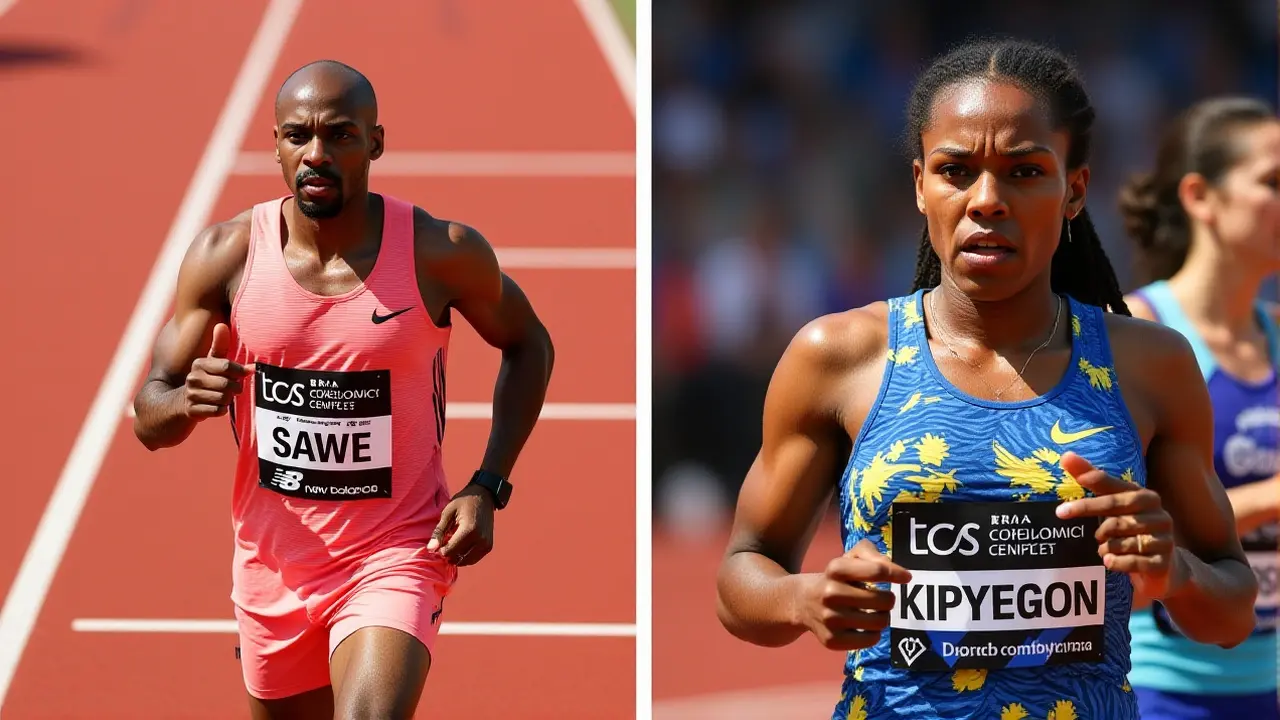
When TIME unveiled its inaugural TIME100 Sports listNew York City on June 9, 2026, the global sports community didn't just see a ranking—they saw a shift in power. Leading the charge were two Kenyan giants: marathoner Sabastian Sawe and middle-distance star Faith Chepngetich Kipyegon. Their inclusion isn't just about medals; it’s about redefining human limits.
The list, described as honoring the "100 most influential figures shaping the global sports landscape," moves beyond traditional metrics. It captures athletes, executives, and cultural icons who are actively steering the narrative of modern sport. For Kenya, this moment feels particularly sweet. After years of dominance in distance running, these two athletes have cemented their status not just as champions, but as global influencers.
Breaking the Two-Hour Barrier
Here's the thing about Sabastian Sawe’s achievement: it wasn't just fast. It was historic. On April 26, 2026, at the London MarathonLondon, Sawe crossed the finish line in 1 hour, 59 minutes, and 30 seconds. That time shatters the previous world record by 65 seconds and makes him the first person in history to run an official, record-eligible marathon in under two hours.
Don't confuse this with Eliud Kipchoge’s famous 2019 sub-two-hour run in Vienna. Kipchoge’s effort was incredible, sure, but it was part of a controlled experiment with rotating pacemakers—no official records kept. Sawe did it in open competition, battling against elite rivals like Ethiopia’s Yomif Kejelcha, who also broke the two-hour barrier (though unofficially for record purposes). Sawe’s pace? A blistering 17 seconds per 100 meters over 42.195 kilometers. The Seattle Times called it a performance that "shattered a psychological ceiling for humanity."
The impact was immediate. Back in Nairobi, President William Ruto welcomed Sawe home, awarding him 8 million Kenyan shillings (about $62,000) for his gold medal and world record. This state recognition underscores how deeply national pride is tied to athletic excellence in Kenya.
Kipyegon’s Reign of Dominance
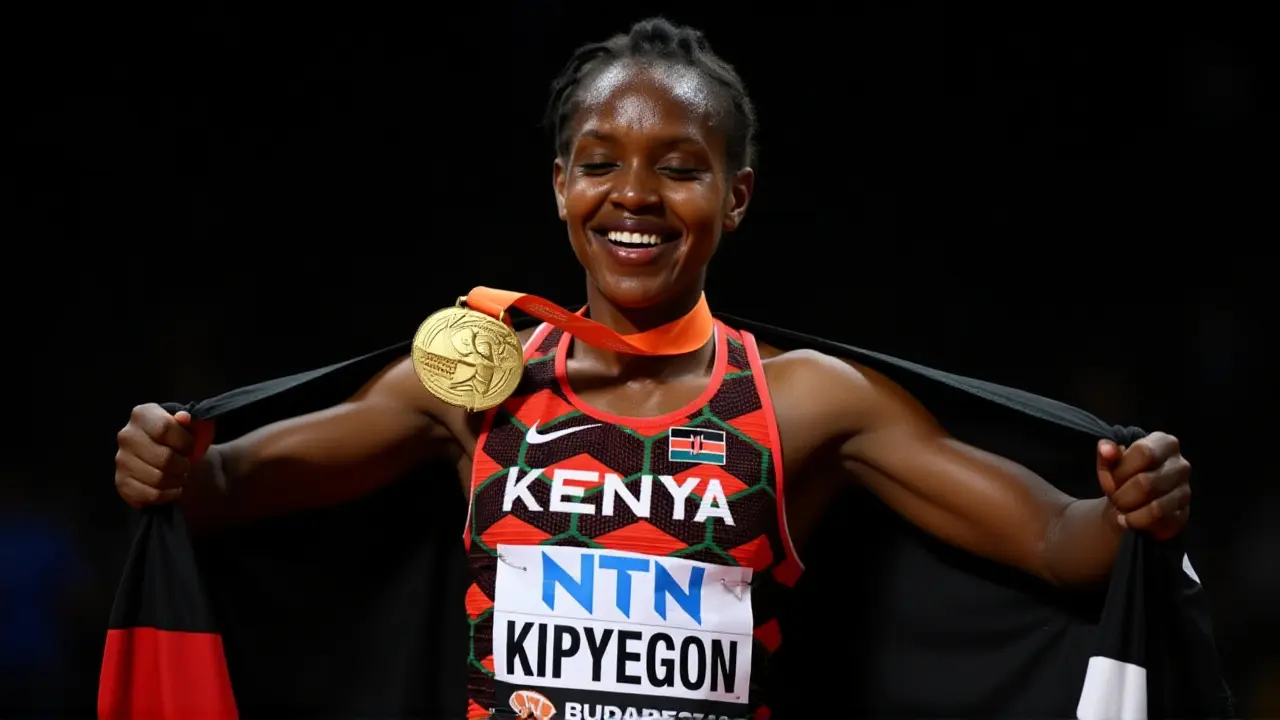
While Sawe made headlines for breaking barriers, Faith Kipyegon earned her spot as a "Leader" through sheer, unadulterated consistency. She is the only three-time Olympic champion in the 1500 meters, having won gold in Rio 2016, Tokyo 2020, and Paris 2024. That’s eight years of being untouchable.
Her resume reads like a fantasy team draft:
- World record holder in the 1500m (3:48.68) and the mile.
- Former world record holder in the 5000m.
- Only the second woman ever to hold both the 1500m and 5000m records simultaneously.
- Winner of five World Championship titles in the 1500m.
But what really sets Kipyegon apart in 2026 is her role as a working mother competing at the absolute peak of her sport. Pulse Sports noted that TIME’s inclusion honors her "ongoing impact as an icon for working mothers everywhere." She proves that longevity and peak performance aren't mutually exclusive. At the 2024 Kenyan Olympic Trials in Nairobi, she won both the 1500m and 5000m, showing no signs of slowing down despite the physical demands of motherhood and elite training.
A Global Stage for Kenyan Talent
Being on the TIME100 Sports list means sharing digital real estate with legends like LeBron James, Lionel Messi, and Shohei Ohtani. But there’s a distinct difference here. While many names on the list are recognized for their commercial empires or media presence, Sawe and Kipyegon are there because they changed the sport itself.
The list is organized into categories like "Icons" and "Leaders." Sawe is often cited as the "headliner" of the running contingent, while Kipyegon fits squarely into leadership due to her influence on the next generation of female runners. New African magazine previously named her among the Top 100 most influential Africans, highlighting that her reach extends far beyond the track.
This recognition comes at a pivotal time for Kenyan athletics. With the rise of new stars and evolving training methods, the country is maintaining its grip on distance running. Sawe’s record-breaking run and Kipyegon’s sustained dominance signal that Kenya isn't just participating in the global sports conversation—it’s leading it.
What’s Next for the Duo?
The clock is already ticking toward the next major milestones. For Sawe, the question is whether he can defend his title at future marathons or if other runners will quickly close the gap on his sub-two-hour mark. For Kipyegon, eyes are on the upcoming World Championships and potentially another Olympic cycle, where she’ll aim to extend her unprecedented streak.
The broader implication? We’re witnessing a golden era of distance running. When you have one athlete breaking historical barriers in the marathon and another dominating the middle distances for nearly a decade, fans have every reason to be excited. The TIME100 Sports list didn't just recognize them; it validated the current state of the sport.
Frequently Asked Questions
Why is Sabastian Sawe’s marathon record considered more significant than Eliud Kipchoge’s?
Kipchoge’s 2019 sub-two-hour run was an experimental event with controlled conditions and pacemakers, so it doesn't count as an official world record. Sawe’s 1:59:30 was achieved in an open, competitive race at the London Marathon, making it the first legal, record-eligible sub-two-hour marathon in history.
What specific achievements led to Faith Kipyegon’s inclusion on the list?
Kipyegon is the only three-time Olympic champion in the 1500m (Rio 2016, Tokyo 2020, Paris 2024). She holds world records in the 1500m and mile, and was formerly the 5000m record holder. Her status as a dominant force and inspiration for working mothers also contributed to her selection as a "Leader."
How much money did Sabastian Sawe receive from the Kenyan government?
President William Ruto awarded Sawe 8 million Kenyan shillings, which is approximately $62,000 USD, following his world-record victory at the London Marathon. This award recognized both his gold medal win and his historic breaking of the two-hour barrier.
Who else is on the TIME100 Sports list alongside Sawe and Kipyegon?
The list features global superstars such as LeBron James, Lionel Messi, Cristiano Ronaldo, Shohei Ohtani, Caitlin Clark, and A’ja Wilson. It includes athletes, coaches, executives, and cultural power players across various sports, highlighting those who shape the industry beyond just playing.
 Sports