
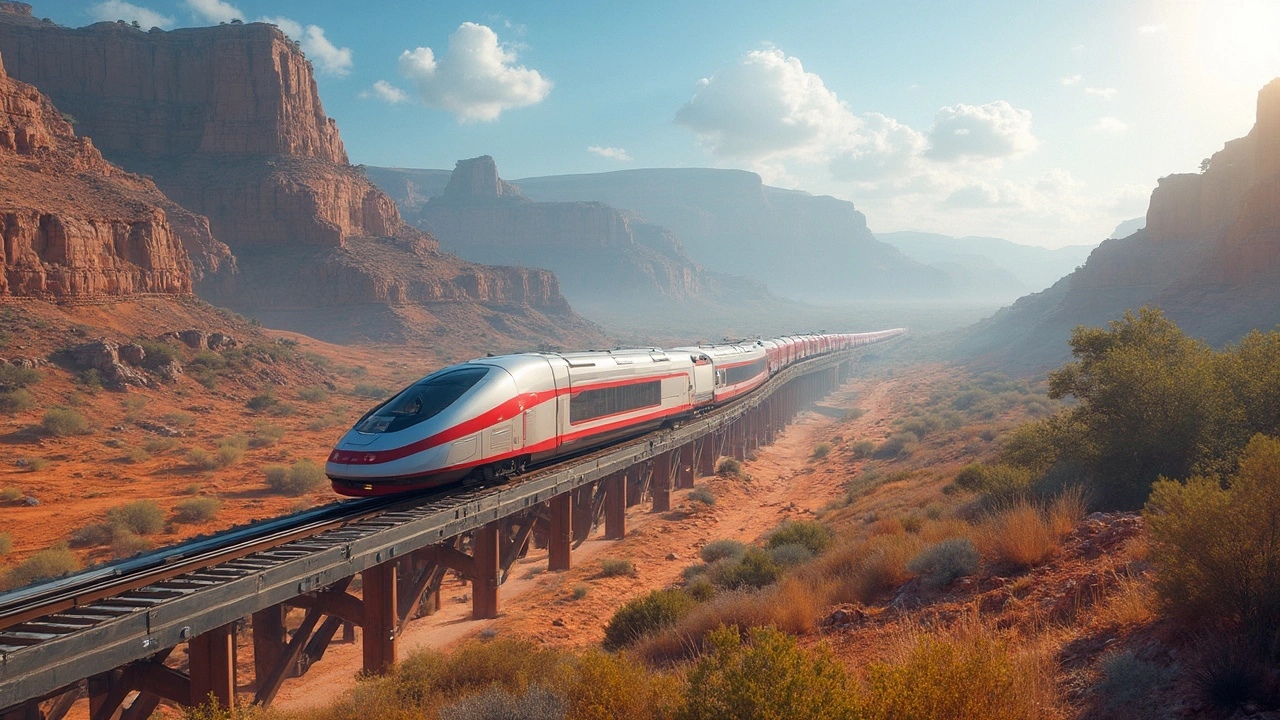
If you're a fan of trains (or just riding them), you've probably never thought about the intricate systems keeping those giant metal machines on track. Meet ladder track—an exciting twist in rail technology that quietly revolutionizes how railways operate.
Imagine rails sitting atop long beams running parallel to the tracks. That's what ladder track is all about: using these longitudinal beams supported by cross connectors to create a solid base for the rails. This design isn't exactly brand new; it got its start way back in the 19th century with what was then called 'baulk road' designs. Rails like those on the Birmingham and Gloucester Railway back then were all about smooth rides and less wear on the wheels. But there were challenges, like dealing with wet weather and wheel slip issues on slopes.
Fast forward to the late 20th century, and there were some pretty cool updates. Think Tubular Modular Track (or TMT), which came to life thanks to Peter Küsel in the 1980s. By using materials like precast concrete and rubberized cork pads, TMT has reshaped how railway systems can withstand extreme conditions like wet or desert environments. Over in Japan, the Railway Technical Research Institute has also been busy developing their own sophisticated versions that focus on reducing vibrations and noise—something train travelers absolutely appreciate.
Today’s ladder tracks do more than just keep things running smoothly. They also bring less pressure on the track bed, resisting degradation and offering enhanced stability. They're proving to be a smart pick for projects around the globe in places like South Africa and Saudi Arabia. Who knows where this innovative ride will take us next?
- What is Ladder Track?
- A Blast from the Past: Early Designs
- Why Longitudinal Beams Matter
- Modern Innovations: TMT and Japan’s Models
- Benefits Over Traditional Sleepered Tracks
- Where Is Ladder Track Headed?
What is Ladder Track?
Imagine a railway track that's a bit like a ladder, and you've got the idea of a ladder track. It's called that because, instead of using the standard railway sleepers, it uses a series of longitudinal beams—think of the long sides of a ladder—with transverse connectors, like the rungs, to keep rails stable and maintain the right gauge width.
This system embraces the concept of resting the rails on continuous supports, rather than the usual perpendicular ones, offering a different approach to distributing the loads. Historically, it draws inspiration from what was once known as 'baulk road'. Used in the 19th century on British tracks like the Birmingham and Gloucester Railway, these designs laid the groundwork for the smoother, more efficient rail systems we strive for today.
Why Use Longitudinal Beams?
So, why mess with tradition and go with longitudinal beams? For starters, they offer better support to the rails, literally running parallel beneath them. This layout helps reduce vertical vibrations and noise—an impressive accomplishment for such a simple tweak. Passengers might not see it, but they certainly feel the difference in a quieter, smoother ride.
Keeping Up With the Times
The modern ladder track isn't stuck in the past; it's evolved. Innovations like the Tubular Modular Track (TMT) have brought in materials like precast concrete and rubberized cork pads, making the whole system more resilient to tough weather. This is great news for places with wet or desert conditions. And let’s not forget Japan’s Railway Technical Research Institute, crafting tracks that can handle hefty 40-tonne axle loads. Impressive, right?
To sum it up, ladder tracks are all about mixing the old with the new to create railway systems that are more efficient and easy to maintain. They're shaping the future of rail travel, one beam at a time.
A Blast from the Past: Early Designs
Back in the day, when railways were just starting to transform the world, the ladder track we know today was barely a thought. Instead, it had humble beginnings under the guise of what was known as 'baulk road.' Imagine the scene: wooden beams laid parallel to the rail path, doing the tough job of balancing and aligning the tracks. This setup was more of a necessity than a luxury, born out of the need to provide a smoother, more stable ride.
One of the key players in these old school railways was the Birmingham and Gloucester Railway, among others like the Great Western Railway. These systems embraced the baulk road design, mostly because it promised a buffer against issues like excessive wheel wear. This mattered a lot back then, given that the machinery was rougher, and the physics of railway travel still mystified many engineers.
Now, let's talk about some early-day hiccups. Though these historical designs gave a relatively smooth ride, they struggled in wet conditions. Hydraulic pumping was a real spoiler when the track structure couldn't resist the water seeping beneath. Plus, wheel slip on inclines was like the surprise guest you never wanted at a party. Railways had much to learn from these initial setbacks.
But as with any technology that stands the test of time, these early designs laid foundational knowledge that would eventually spark powerful innovations and the emergence of modern railway innovations like Tubular Modular Track and advanced Japanese models. It's intriguing how these old methods served as a learning curve, setting the path for future developments.
Why Longitudinal Beams Matter
When it comes to railway innovation, longitudinal beams might not be the first thing that comes to mind, but they play a crucial role in modern railway systems. These beams run parallel to the tracks, offering a unique way to support and stabilize the rails. The innovation isn’t just about keeping trains on track; it's about enhancing the entire rail network's efficiency.
Strong Support
The design of these beams helps in evenly distributing the load. Unlike traditional sleeper tracks, which focus the pressure on single points, ladder track systems spread it across a longer section. This means less wear and tear on the tracks, prolonging their lifespan. It’s like upgrading from an old flip phone to a smartphone—you get way more bang for your buck.
Reduction in Maintenance
Ladder tracks require less upkeep compared to traditional systems. This can be a game-changer for countries looking to reduce costs without compromising safety. Michael Rogers from the Railway Engineering Journal once noted,
"Longitudinal support structures provide unparalleled stability, reducing maintenance by up to 30% in some cases."
Handling Heavy Loads
If you think about trains carrying tons of goods every day, the demand on those tracks is enormous. These longitudinal beams are specifically designed to handle heavy axle loads, sometimes up to 40 tonnes, like it’s no biggie. This makes them ideal for busy rail lines where weight isn’t just a factor—it’s a typical Thursday afternoon.
No More Shaky Rides
Ever struggled to sip a coffee on a train because of all those bumps and shakes? Well, ladder tracks have your back. They minimize vibrations and noise, making journeys smoother for both passengers and freight. In fact, Japan's Railway Technical Research Institute (RTRI) shows that these systems reduce vertical vibrations by a significant margin.
Beyond Traditional Methods
With the advent of technologies like Tubular Modular Track (TMT), we see robust, ballastless designs that cope better in extreme conditions, from the wet and rainy to scorching deserts. By incorporating materials such as precast concrete and rubberized cork pads, TMT is pushing boundaries.
- Resistance to Weather: Works well in varied climates, keeping rails functioning seamlessly.
- Environmental Benefits: Less volatile materials mean better eco-friendliness.
The future of railway tech is being built today by these modest yet mighty innovations. Who would have thought that something as unassuming as a longitudinal beam could make such a big difference?
Modern Innovations: TMT and Japan’s Models
The world of railway technology has seen some pretty amazing developments, particularly with the introduction of Tubular Modular Track (TMT) and the ladder track designs coming out of Japan. Let's break down these cool innovations that are steering railways in a new direction.
Getting to Know TMT
TMT, which stands for Tubular Modular Track, was pioneered by Peter Küsel back in 1989. This approach shook things up by introducing precast concrete supports as an alternative to the older wooden styles. But that's not all—these supports come with rubberized cork pads and steel tie beams that make them super stable and reliable in extreme conditions.
The great thing about TMT is its modular design, which means it can be assembled easily like a set of blocks. This ballastless system is a hit in places like South Africa's Gautrain and Saudi Arabia's rail projects because it's perfect for both wet and desert environments where conditions can be pretty harsh. TMT provides lower maintenance requirements, making it a practical choice for modern rail systems.
Innovations from Japan
Across the globe, Japan's Railway Technical Research Institute (RTRI) has been busy innovating too. They've come up with unique designs like ballasted and floating un-ballasted ladder tracks. These systems use pre-stressed concrete supports with steel cross members, offering the tracks much-needed durability and strength.
What blows my mind is how these tracks tackle vertical vibrations and noise. By having versions that can handle heavy 40-tonne axle loads, they're achieving smoother and quieter rides. This is a big win, especially in densely populated areas where noise reduction is key.
To dive a bit deeper, here's what makes these technologies so effective:
- Durability: Both TMT and Japan's models show remarkable resistance to wear and tear, extending the life of the railway tracks.
- Stability: Using materials like pre-stressed concrete minimizes track flexing, which helps reduce maintenance costs and improve safety.
- Environment Versatility: Able to withstand extreme environmental conditions, these tracks are ideal for a variety of geographical settings.
With the advancements in ladder track technology, it's clear these innovations are paving the way for a new era in railway systems, making our rail journeys smoother and more reliable wherever they take us.
Benefits Over Traditional Sleepered Tracks
When it comes to modern railway systems, ladder tracks outshine traditional sleepered tracks in several ways. Let's dig into the specifics of why they are considered a better option these days.
Lower Maintenance and Increased Stability
Ladder tracks, like the ladder track and Tubular Modular Track, require less upkeep than their sleepered counterparts. Since they're ballastless, there's much less material to maintain and replace over time—meaning fewer disturbances to train schedules and lower long-term costs. Plus, with the solid, continuous support of longitudinal beams, these tracks offer additional stability, especially crucial in harsh environmental conditions like those found in desert or extremely wet areas.
Reduced Bed Pressure and Added Comfort
Ever been on a train ride where every bump is a game of 'guess what my coffee's doing next'? ladder tracks help smooth out those miserable journeys. By spreading the weight more evenly across the rail infrastructure, they apply less pressure on the track bed. This results in less deformation and degradation of materials, translating into fewer repairs and more moola saved.
Not only do these railway innovations benefit the infrastructure, but passengers also enjoy a quieter and generally more comfortable ride because longitudinal beams and clever engineering significantly reduce noise and vertical vibrations.
Handling Heavy Loads
Amazing news for freight operators: modern ladder tracks have the flexibility to handle heavier axle loads. For instance, Japan's Railway Technical Research Institute has designed tracks capable of supporting 40-tonne axle loads—talk about heavy lifting! This capacity allows for more freight per trip and offers increased efficiency for industries relying on rail transport.
| Metric | Ladder Track | Traditional Sleepered Track |
|---|---|---|
| Maintenance Frequency | Low | High |
| Axle Load Capacity | Up to 40 tonnes | Typically less |
| Ride Comfort | High | Standard |
| Noise & Vibration | Reduced | Higher |
These numbers might look boring, but trust me, they matter when you're looking at costs and quality ride experiences over the decades. Ultimately, ladder tracks provide significant practical benefits that can't be ignored in the ever-evolving world of rail transport.
Where Is Ladder Track Headed?
Alright, let's gaze into the crystal ball to see where this fascinating railway technology is heading. The ladder track design isn't just a passing fad; it's got real staying power in the world of railways. As modernization of railway networks continues to be a priority globally, ladder track systems are set to play a key role in that evolution.
Expansion into New Markets
Currently, we've seen major adoption of ladder tracks in places like South Africa and Saudi Arabia. These areas are perfect for showcasing the benefits of ladder track in extreme weather conditions, namely wet or desert regions. But the appetite for this innovation is growing beyond the usual suspects.
Asia and particularly China are showing interest as they continue expanding their already impressive high-speed networks. The emphasis is on reducing maintenance costs and improving ride quality, and this is where ladder track comes into its own.
Innovative Materials and Methods
Developers aren't resting on their laurels; they're tinkering and testing new materials to make ladder tracks even better. There's ongoing research into more environmentally friendly materials, like recycled composites, which offer similar durability and resilience without the hefty environmental footprint. Not to mention, solar panels integrated into track systems could just be around the corner to power various rail operations.
High-Speed and Heavy Load Applications
Ladder tracks, thanks to their stability, are ideal candidates for tracks required to handle high-speed trains or significant loads. With the ever-growing demand for cargo transport, railways equipped with ladder track systems could become more prevalent, providing a reliable backbone for freight-heavy routes.
Will It Replace Traditional Tracks?
Don't expect all traditional tracks to disappear overnight. They still have their place and, in many cases, work just fine. But where ladder tracks shine—in challenging environments or high-wear scenarios—they’re making their case convincingly.
As railway innovation keeps barreling forward, ladder tracks are positioned as front-runners in the quest for more effective, sustainable rail systems. It's a thrilling time to watch this space evolve, especially with the promise of smoother rides and lower maintenance costs leading the charge.
 Sports
Pierce Smith
February 25, 2025 AT 21:36Having read the overview of ladder track, I’m impressed by how the design marries historic concepts with modern materials. The longitudinal beams really do spread the load more evenly, which translates to less wear on both rails and sleepers. It also seems that the reduced vibration benefits passengers, especially on longer journeys where comfort matters. From a maintenance perspective, fewer ballast disruptions mean lower lifecycle costs for operators. Overall, the technology looks like a pragmatic step forward for rail networks dealing with diverse climates.
Abhishek Singh
March 4, 2025 AT 21:26Wow another fancy track that will never work
hg gay
March 11, 2025 AT 21:30Honestly, the ladder track concept feels like a quiet hero in railway engineering 🌟. By replacing traditional sleepers with continuous longitudinal beams, the system distributes stresses across a larger area, which in turn lessens the pounding on the ballast and the underlying subgrade. This reduction in point loading not only extends the service life of the track but also cuts down on the frequency of scheduled maintenance windows – a win for operators and passengers alike. The TMT approach, with its precast concrete and rubberized cork pads, adds a layer of resilience against extreme temperature swings, making it suitable for both hot deserts and rain‑soaked regions. Japan’s implementation pushes the envelope even further by handling 40‑tonne axle loads while keeping noise and vibration to a minimum, which is a huge plus in densely populated urban corridors. From an environmental angle, the ballastless nature means less raw material extraction and lower carbon emissions during construction, aligning with greener infrastructure goals. Moreover, the modular nature of these systems can speed up installation times, reducing track‑downtime and associated revenue loss. For freight operators, the ability to support heavier loads translates directly into higher payloads per train, enhancing overall logistical efficiency. The design also lends itself well to integration with smart monitoring sensors, offering real‑time data on stress, temperature, and wear – a step toward predictive maintenance. I can see future iterations incorporating recycled composites or even solar cells embedded within the track structure, feeding power back into signaling systems. All these factors combine to make ladder track not just a niche solution, but a versatile platform for next‑generation railways 🚆. In short, it’s a blend of historical insight and cutting‑edge engineering that could reshape how we think about rail infrastructure for decades to come 😊.
Owen Covach
March 18, 2025 AT 21:33Nice rundown, especially the colorful bit about turning old‑school beams into a modern ride‑smoothener. The minimal punctuation fits the chill vibe, but the point lands clear – less noise, less upkeep, more comfort. It’s a smart play for any rail line hunting for durability without breaking the bank.
Pauline HERT
March 25, 2025 AT 21:36From a national perspective, embracing ladder track shows how we can lead in railway innovation while cutting costs. The mixed formality mirrors the balance between tradition and progress that our infrastructure needs. Heavy‑load capacity means freight can move faster, bolstering our economy. Plus, the quieter operation benefits communities near the lines.
Ron Rementilla
April 1, 2025 AT 22:40I appreciate how the comment highlights the practical benefits without overstating hype. The balanced tone acknowledges both the engineering merits and the real‑world constraints, which is exactly the kind of measured discussion needed when evaluating new rail technologies.
Chand Shahzad
April 8, 2025 AT 22:43It's encouraging to see collaborative efforts worldwide-South Africa, Saudi Arabia, Japan-all adopting ladder track solutions. Such shared progress not only improves rail reliability but also sets a precedent for sustainable infrastructure development across borders.